






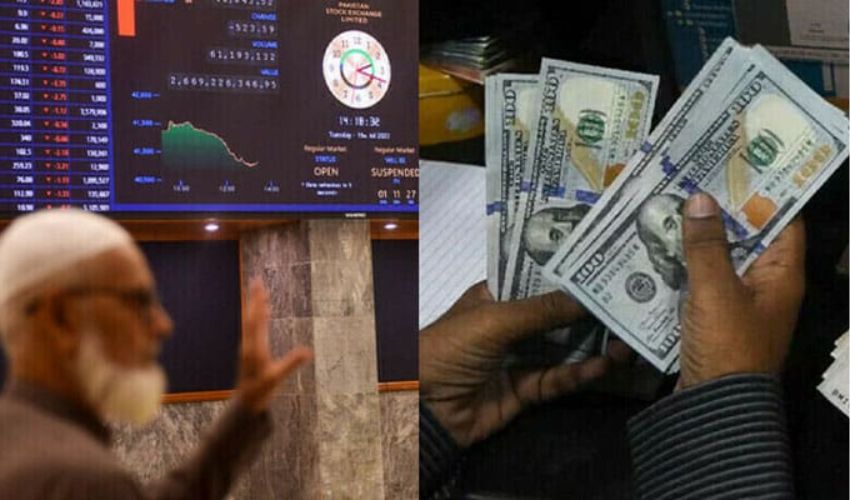
The recent developments in Pakistan’s economic landscape indicate a combination of factors contributing to a changing financial environment. The notable shift in the value of the US Dollar in the interbank market in Karachi, with a decrease of 15 paisas, reflects a possible strengthening of the Pakistani Rupee. This change could signal a stabilizing trend in the foreign exchange market, with the US Dollar settling at Rs 278.15. The downward trend continued, with the Dollar depreciating by another six paisas on Thursday, resulting in a rate of Rs 278.25 in interbank trading.
Alongside this, the Pakistan Stock Exchange (PSX) experienced a significant rebound after a period of decline. The KSE-100 index surged by 550 points, breaking through the 71,000-point barrier and reaching 71,200 points. This resurgence in the stock market comes after a downturn earlier in the week, when the KSE-100 index fell by 250 points to 70,850. The rebound suggests renewed investor confidence, potentially driven by broader economic factors or specific corporate developments.
Additionally, inflation data from the Pakistan Bureau of Statistics (PBS) shows a decline in the country’s inflation rate, indicating a possible easing of price pressures. In April, inflation stood at 17.3%, representing a decrease of 0.4% compared to March’s rate of 20.7%. This decline in inflation is significant, considering that in April 2023, inflation peaked at 36.4%. The average inflation rate from July to April of this financial year was 25.97%. Urban areas saw a marginal decrease in inflation to 19.4%, while rural areas experienced a larger drop to 14.5%.
These developments suggest a potential improvement in Pakistan’s economic conditions, with a more stable currency, a buoyant stock market, and a downward trend in inflation. However, these trends require careful monitoring to determine if they represent a sustained shift or are temporary fluctuations. Factors such as government policy, international economic conditions, and domestic political stability could influence the trajectory of these economic indicators.


