





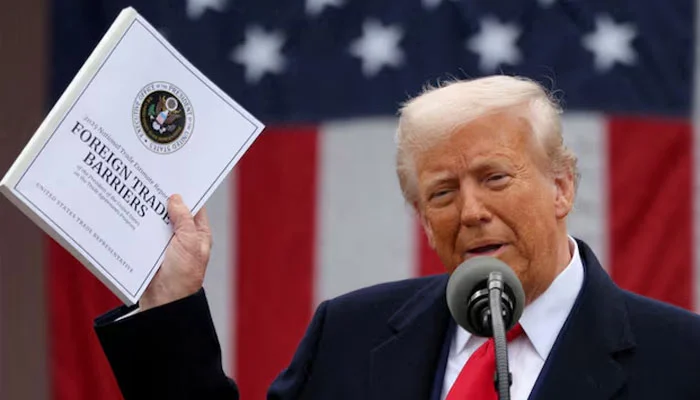
The Pakistan Stock Exchange (PSX) faced a dramatic downturn on April 7, 2025, with the KSE-100 index plunging by a staggering 3,300 points in a single day. This massive fall was triggered by a global financial tremor caused by former U.S. President Donald Trump’s reintroduction of aggressive trade tariffs, sparking widespread investor panic and market instability across the world.
This event marks one of the most significant single-day drops in PSX history and has raised serious concerns among traders, analysts, and policymakers in Pakistan.
What Caused the Market Crash?
The key factor behind this financial meltdown was the announcement of new U.S. tariffs on key global imports, a move by Donald Trump that has reignited fears of a global trade war. As the world’s largest economy resumes a protectionist stance, financial markets worldwide, including Pakistan’s, responded with immediate volatility and massive sell-offs.
The shockwaves were felt across all major indices. In the U.S., the Dow Jones Industrial Average dropped over 1,400 points, while the S&P 500 fell by more than 200 points. These trends triggered panic in Asian markets, and eventually at the PSX, where local investors rushed to offload shares, fearing worsening economic outlooks.
Sector-Wide Impact on Pakistan’s Market
The sell-off at PSX wasn’t limited to a single sector. Major losses were recorded in energy, technology, textile, banking, and manufacturing. Key companies such as Pakistan State Oil (PSO), Kohinoor Textile Mills (KTML), and Pak Elektron Limited (PAEL) witnessed sharp drops in share prices, dragging the market further into the red.
Analysts pointed out that foreign outflows and negative market sentiment played a central role. Many global investors pulled out funds from emerging markets like Pakistan to seek safer assets such as U.S. Treasury bonds and gold.
Global Trends and Local Repercussions
The crash at PSX mirrors similar trends around the world. Financial institutions and stock exchanges across Europe, Asia, and North America are dealing with high volatility, with fears of recession looming large. For Pakistan, which is already facing challenges like rising external debt, inflation, and energy crises, the situation poses additional economic stress.
Experts warn that unless global tensions de-escalate, markets may continue to remain volatile, impacting foreign direct investment (FDI) and local investor confidence in Pakistan.
What’s Next for Investors and Policymakers?
For now, market experts are advising caution, suggesting that retail and institutional investors avoid panic selling and instead focus on long-term strategies. The government and financial regulators like the State Bank of Pakistan (SBP) and the Securities and Exchange Commission of Pakistan (SECP) are expected to monitor the situation closely and possibly intervene if volatility persists.
On the global stage, economists are urging world leaders to come to the negotiation table and prevent a prolonged trade conflict that could derail the fragile post-COVID economic recovery.
As Pakistan navigates this turbulence, the coming weeks will be crucial in determining whether this crash was a one-time shock or the beginning of a more sustained downturn.


