





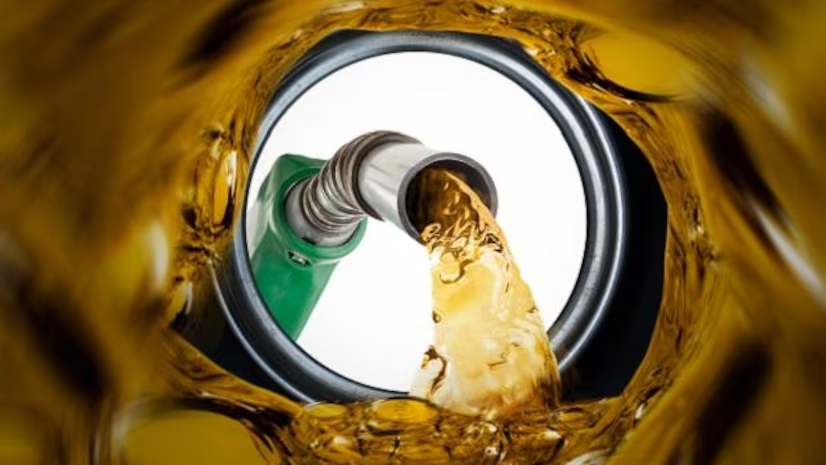
In welcome news for millions of consumers, Pakistan is expected to witness a significant reduction in fuel prices in the coming days, with estimates suggesting a cut of up to Rs12 per litre. This anticipated price drop is largely tied to the recent decline in global crude oil rates and could offer much-needed relief amid ongoing economic challenges and inflationary pressures.
Global Oil Prices See Sharp Decline
The primary reason behind the expected fuel price cut is the substantial drop in international oil prices. Brent crude, one of the key benchmarks for global oil, has fallen sharply from over $74 per barrel at the end of March to nearly $60 per barrel in early April. This $14 dip per barrel has opened the door for the Pakistani government to adjust domestic fuel rates accordingly.
As Pakistan imports a significant portion of its petroleum products, any shift in global prices tends to impact local rates. Lower international oil prices reduce the cost burden on the government and oil importers, creating room to pass on the benefit to consumers.
Petrol and Diesel Prices Likely to Drop
According to market analysts and sources within the petroleum sector, the prices of both petrol and high-speed diesel could come down by Rs10 to Rs12 per litre. If implemented, this would be one of the most significant fuel price reductions in recent months.
The expected revision comes at a crucial time, particularly during the holy month of Ramadan, when travel and transport activities increase and fuel affordability becomes even more essential for the general public.
GST and Levy Considerations Still in Play
While the price cut is largely expected due to falling global prices, there is still uncertainty around whether the government might use this opportunity to impose or increase the General Sales Tax (GST) on petroleum products. At present, the government charges a petroleum levy of up to Rs70 per litre on both petrol and diesel.
Given the current fiscal challenges, authorities may consider reintroducing or increasing GST as a revenue-generation measure. However, such a move could dilute the benefits of the global price reduction for end consumers. The final pricing decision will depend on the Ministry of Finance and its broader economic strategy.
Public Relief and Economic Impact
If the price cut is implemented in full, it could provide much-needed relief for households, transporters, and industries alike. Lower fuel prices would help reduce the cost of goods and services, potentially slowing down inflation. It could also help ease the financial burden on low- and middle-income families struggling with rising living costs.
Moreover, a reduction in fuel prices often leads to increased mobility and business activity, which can contribute positively to economic growth, particularly in the transport and logistics sectors.
Conclusion
The possibility of up to Rs12 per litre cut in fuel prices has raised hopes across Pakistan. While global oil markets have created the ideal conditions for a price reduction, the final decision will depend on the government’s fiscal policies and taxation choices. For now, Pakistanis can look forward to a potential decrease in transport costs — a welcome development in the current economic climate.


