


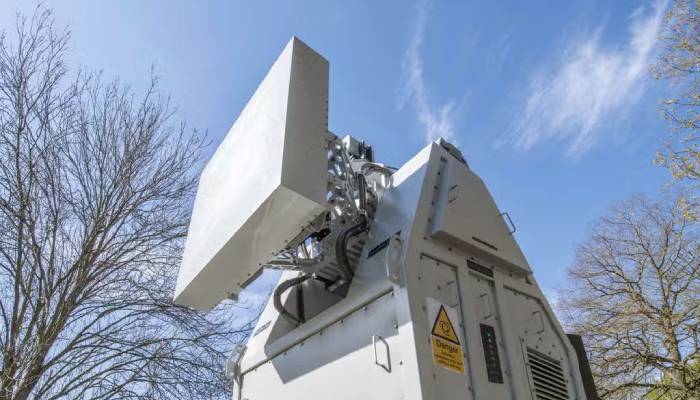
The UK is working on an Advanced Radio Wave Weapon that uses radio waves to stop drones. This development is crucial because drones, while often used for fun, can also be employed for harmful purposes like spying, smuggling, and even carrying out attacks.
How Advanced Radio Wave Weapon will work?
It sends out a powerful beam of radio waves that interfere with a drone’s systems. Think of it like jamming a signal. Drones rely on these signals to communicate with their operators and to navigate. When the radio waves from this weapon hit the drone, they disrupt these signals, causing the drone to lose control and stop working.
This method of dealing with drones has several big advantages over more traditional methods. For one, it’s non-lethal. That means it doesn’t cause explosions or other damage that could harm people or property nearby. Shooting down drones or using nets can be dangerous, especially in crowded areas. This radio wave weapon, on the other hand, can precisely target the drone without causing any collateral damage.
The development of this technology is part of the UK’s broader effort to improve national security. With drones becoming more advanced and accessible, the threats they pose are also increasing. By investing in new technologies like this radio wave weapon, the UK is taking steps to stay ahead of these threats and protect important places and people.
Another significant aspect of this technology is its flexibility. It can be used in various situations where drones might pose a risk. For example, police could use it to stop drones from flying over large public events where they could pose a danger. The military could use it to protect bases and other sensitive areas from drone attacks. Even places like airports, which have had problems with drones causing disruptions, could benefit from this technology to ensure the safety of flights.
The development and use of this technology also highlight a shift towards electronic warfare. In today’s world, where so much depends on electronic systems, the ability to disrupt these systems can be incredibly powerful. This weapon taps into that power, providing a modern and sophisticated tool for defense.
Of course, there are challenges to consider. It’s essential to ensure that the weapon can target only the drones that pose a threat without affecting other devices. There are also regulatory and ethical issues to think about, such as privacy concerns and the potential for misuse.
In conclusion, the UK’s new radio wave weapon represents a significant leap forward in drone defense. It offers a safe, precise, and effective way to neutralize drones, addressing the growing problems they can cause. By developing and implementing this technology, the UK is taking proactive steps to enhance its national security and protect its citizens. This innovative approach could serve as a model for other countries facing similar challenges, demonstrating the vital role of technological advancement in keeping people safe in the modern world.

