

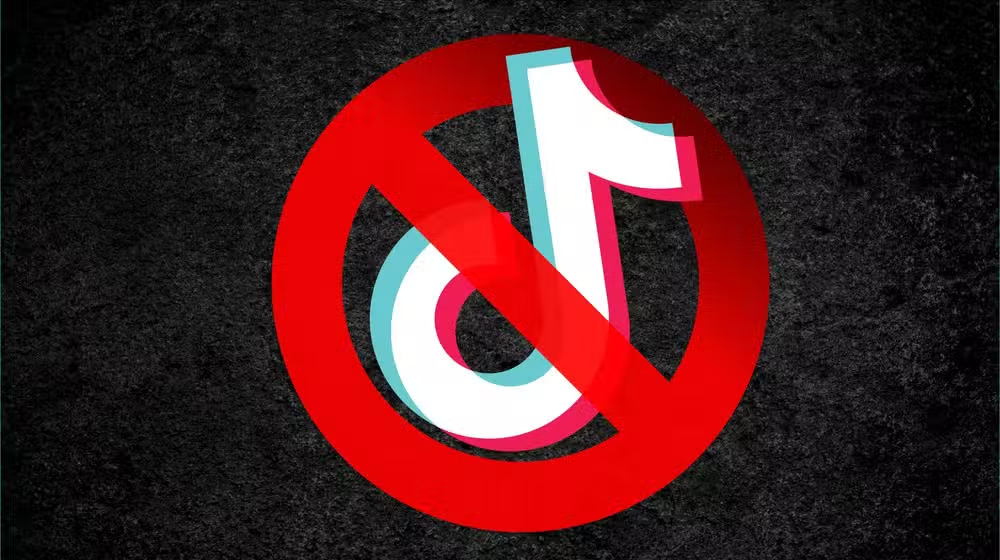
The United States’ decision to ban TikTok has been a focal point of intense debate, with recent reports suggesting that Israeli concerns significantly influenced this move. The Protecting Americans from Foreign Adversary Controlled Applications Act (PAFACA), enacted in April 2024, mandated the sale of TikTok by its Chinese parent company, ByteDance, or face a nationwide ban. While national security has been the primary justification, emerging narratives point to Israel’s apprehensions about TikTok’s role in shaping public opinion during the Israel-Hamas conflict as a pivotal factor.
Israeli Concerns Over TikTok’s Content
Following the Hamas-led attack on Israel on October 7, 2023, Israeli officials expressed alarm over the proliferation of pro-Palestinian content on TikTok. Emmanuel Nahshon, Israel’s Foreign Ministry Deputy Director General, attributed the surge in global youth opposition to Israeli actions to TikTok’s algorithm, which he claimed favored pro-Palestinian narratives. This perspective was documented in a State Department memo, highlighting Israel’s belief that TikTok was instrumental in turning young audiences against Israel.
Further compounding these concerns, U.S. lawmakers noted the platform’s significant influence on public opinion. Senator Mitt Romney pointed out that TikTok had an overwhelming number of mentions supporting Palestinians compared to other social media sites, suggesting a potential bias in content dissemination.
Legislative Response and Allegations of Bias
The apprehensions regarding TikTok’s content led to legislative actions in the U.S. The PAFACA bill, initially lacking momentum, gained significant traction post-October 2023. Representative Mike Gallagher acknowledged that the bill was revitalized due to concerns over anti-Semitic content on TikTok following the October 7 events. This shift indicates that the platform’s perceived role in disseminating pro-Palestinian content was a catalyst for the legislative push.
Critics argue that the ban on TikTok may serve as a form of viewpoint discrimination, potentially infringing upon First Amendment rights. The platform’s younger user base has shown increasing support for Palestinian perspectives, a trend that some believe is being stifled under the guise of national security.
TikTok’s Stance and Content Moderation Efforts
In response to the allegations, TikTok has maintained that its algorithm does not intentionally favor any political stance. The company attributes the prevalence of pro-Palestinian content to the genuine sentiments of its diverse user base, particularly among younger demographics. TikTok has also emphasized its efforts to remove content that violates its community guidelines, including hate speech and misinformation.
Despite these assertions, the platform has faced criticism from various quarters. Some Jewish organizations have accused TikTok of allowing the spread of anti-Semitic content, while pro-Palestinian advocates argue that their narratives are being unjustly censored. This dichotomy underscores the complex challenges social media platforms face in moderating content in politically charged contexts.
Conclusion
The ban on TikTok in the United States extends beyond concerns of data privacy and national security. The platform’s influence on public opinion, especially regarding sensitive geopolitical issues like the Israel-Palestine conflict, has positioned it at the center of international political dynamics. Allegations of Israeli influence in the U.S. decision to ban TikTok highlight the intricate interplay between technology, media, and global politics. As the discourse continues, it raises critical questions about free speech, censorship, and the power of digital platforms in shaping societal narratives.

