


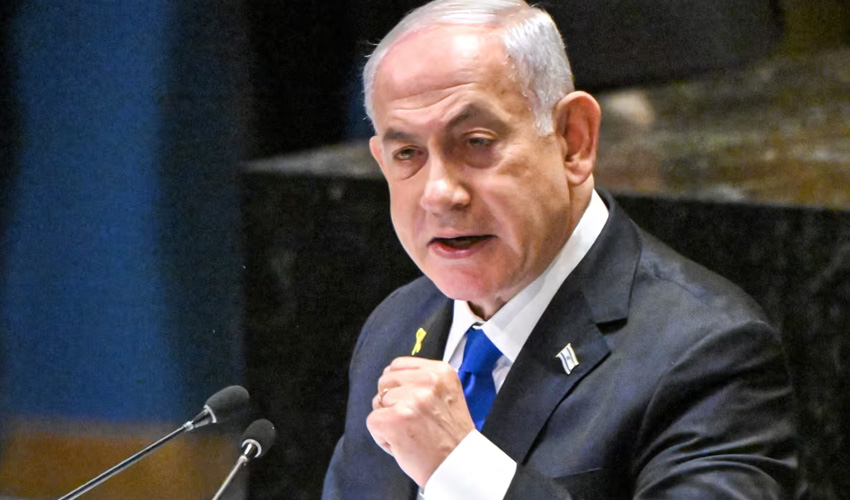
Israeli Prime Minister Benjamin Netanyahu has issued a strong warning to Iran following its missile attack on Israel, labeling it a “big mistake” and promising that the Islamic Republic will “pay a heavy price.” His statement came shortly after Iran launched a missile strike, marking one of the most significant escalations in the region’s recent history. As tensions between the two nations continue to escalate, this confrontation raises concerns about the broader implications for the Middle East.
Iran, on its part, has stated that the missile attack is over unless further provoked. This suggests that Tehran does not plan any additional military actions unless Israel responds with force. However, Israel’s firm stance on retaliating indicates that further confrontation may be on the horizon.
Escalation in Regional Tensions
This missile strike is the latest in a series of confrontations between Israel and Iran, who have long been at odds over regional influence and security concerns. Israel views Iran as its most serious threat, particularly due to Tehran’s nuclear ambitions and its support for militant groups in neighboring countries, such as Hezbollah in Lebanon and Hamas in Gaza.
Netanyahu’s response is aligned with Israel’s long-standing policy of not tolerating direct attacks on its territory. The missile strike from Iran follows a recent increase in military and diplomatic tensions, with Israel accusing Iran of expanding its presence in Syria and Lebanon, regions that share borders with Israel. Israel has conducted multiple airstrikes in Syria to counter Iranian military installations, raising fears of a wider conflict.
Iran’s Response and Justification
Iran, however, defended its missile strike as a necessary response to what it described as Israeli provocations. Tehran has been vocal about its grievances against Israel’s actions in the region, particularly in Syria, where Israeli airstrikes have targeted Iranian military assets. Iranian officials have stressed that their missile attack was a direct response to such strikes and was designed to deter further Israeli aggression.
The Iranian government, through its military spokesmen, indicated that it had no intention of escalating the situation further, barring additional actions by Israel. This cautious statement implies that Iran does not seek an all-out war but will respond if provoked. However, Tehran’s insistence on holding Israel responsible for any future hostilities suggests that the region remains on the edge of further violence.
Netanyahu’s Strategy: Strengthening Israel’s Defense
Netanyahu has long emphasized the importance of maintaining Israel’s military strength and preparedness in the face of perceived threats from Iran. Following the missile attack, Netanyahu made it clear that Israel would take all necessary steps to protect its citizens and territory. His administration has consistently pushed for greater defense capabilities, including missile defense systems and advanced weaponry, which have been critical in countering threats from both Iran and its allies in the region.
In his speech, Netanyahu highlighted Israel’s capacity to strike back, stating that Israel’s military is fully prepared for any scenario. He reaffirmed his commitment to ensuring that Israel’s national security remains intact, irrespective of external pressures or threats. This firm stance has been a key feature of Netanyahu’s leadership, particularly in managing Israel’s often volatile relationship with Iran.
Israel’s defense strategy has largely relied on deterrence, aiming to neutralize threats before they materialize into full-scale conflicts. This includes pre-emptive strikes on enemy targets, gathering intelligence on hostile operations, and forging military alliances with regional powers that share Israel’s concerns over Iran’s growing influence in the Middle East.
Diplomatic Ramifications and Global Reaction
The missile strike and subsequent Israeli response are likely to have far-reaching diplomatic implications. Relations between Iran and Israel have been strained for decades, but recent developments have further deteriorated the situation. The international community is now watching closely, with world powers like the United States and Russia weighing their responses.
The U.S., a staunch ally of Israel, has condemned Iran’s missile attack and reiterated its support for Israel’s right to defend itself. Washington’s backing of Netanyahu’s position is expected to remain firm, particularly in light of the broader context of U.S.-Iran tensions, which have been aggravated by the U.S. withdrawal from the Iran nuclear deal in 2018.
Russia, which has maintained a working relationship with both Israel and Iran, has called for restraint on both sides. Moscow’s position is critical, as it seeks to balance its own interests in Syria, where it has partnered with Iran, while also maintaining open channels of communication with Israel. Russian officials have emphasized the need for dialogue to prevent further military escalation, warning that a broader conflict would destabilize the entire region.
Meanwhile, the European Union has urged both Israel and Iran to exercise caution and avoid actions that could lead to a full-scale conflict. European leaders have also voiced concerns about the potential humanitarian impact of a prolonged military engagement in the region, which is already grappling with various crises, including the war in Syria and the plight of refugees.
The Potential for Further Conflict
Despite Iran’s declaration that its missile attacks are over unless further provoked, the potential for further conflict remains high. Israel’s military strategy has often involved a forceful response to any aggression, and Netanyahu’s strong rhetoric suggests that retaliatory measures are likely. If Israel responds with military force, it could trigger a cycle of retaliation that would escalate the conflict to dangerous levels.
The regional implications of this conflict are profound. Any military confrontation between Israel and Iran could draw in other regional actors, including Hezbollah in Lebanon and various militant groups in Gaza, who have aligned themselves with Tehran. This, in turn, could lead to a wider war in the Middle East, with devastating consequences for the region’s stability and security.

