


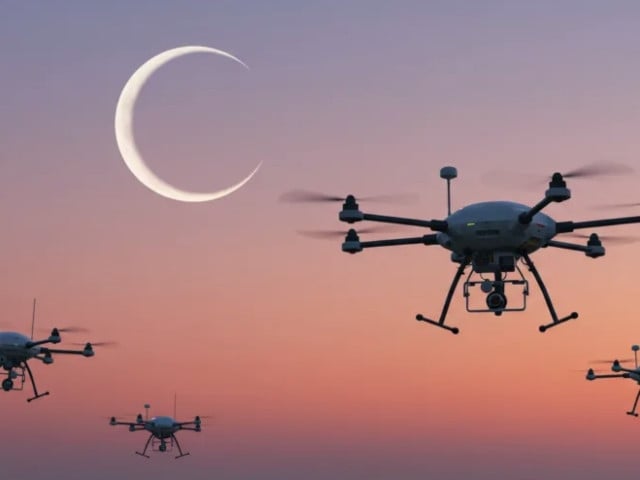
The United Arab Emirates (UAE) is set to use AI-powered drones for the sighting of the Shawwal crescent, marking a significant technological advancement in Islamic moon-sighting practices. This initiative aims to enhance accuracy, eliminate human errors, and modernize the traditional method of determining the start of Eid-ul-Fitr.
AI and Drones Revolutionizing Moon Sighting
For centuries, Islamic scholars and astronomers have relied on manual observations or telescopes to determine the lunar calendar. With AI-powered drones, the process will become more precise and scientific. These drones will:
-
Fly to high altitudes for a clearer view of the moon
-
Use AI to analyze and confirm the visibility of the crescent
-
Eliminate discrepancies and regional variations in moon sighting
This move aligns with the UAE’s vision of integrating artificial intelligence (AI) into various sectors, including science and religious observances.
How Will It Impact Moon Sighting in the Islamic World?
The use of AI drones for moon sighting can bring several benefits:
-
Improved Accuracy – AI-driven analysis reduces the chances of human misjudgment.
-
Uniformity in Eid Dates – Standardized moon sighting could lead to a more unified celebration of Eid across different countries.
-
Faster Announcements – Automated data collection and analysis can provide results instantly, avoiding last-minute uncertainties.
Will Other Countries Follow?
With the UAE leading the way in AI-driven moon sighting, other countries, especially those with advanced space and AI programs, may adopt similar technologies. This could pave the way for a globalized and scientifically backed Islamic lunar calendar.
Conclusion
The UAE’s initiative to use AI-powered drones for Shawwal crescent sighting marks a historic step in blending technology with Islamic traditions. If successful, this could become the future of moon sighting across the Muslim world, ensuring precision and unity in Islamic calendar determinations.

